

How Offline Street Vendors Accept USDC QR Code Payments Without Internet in 2026

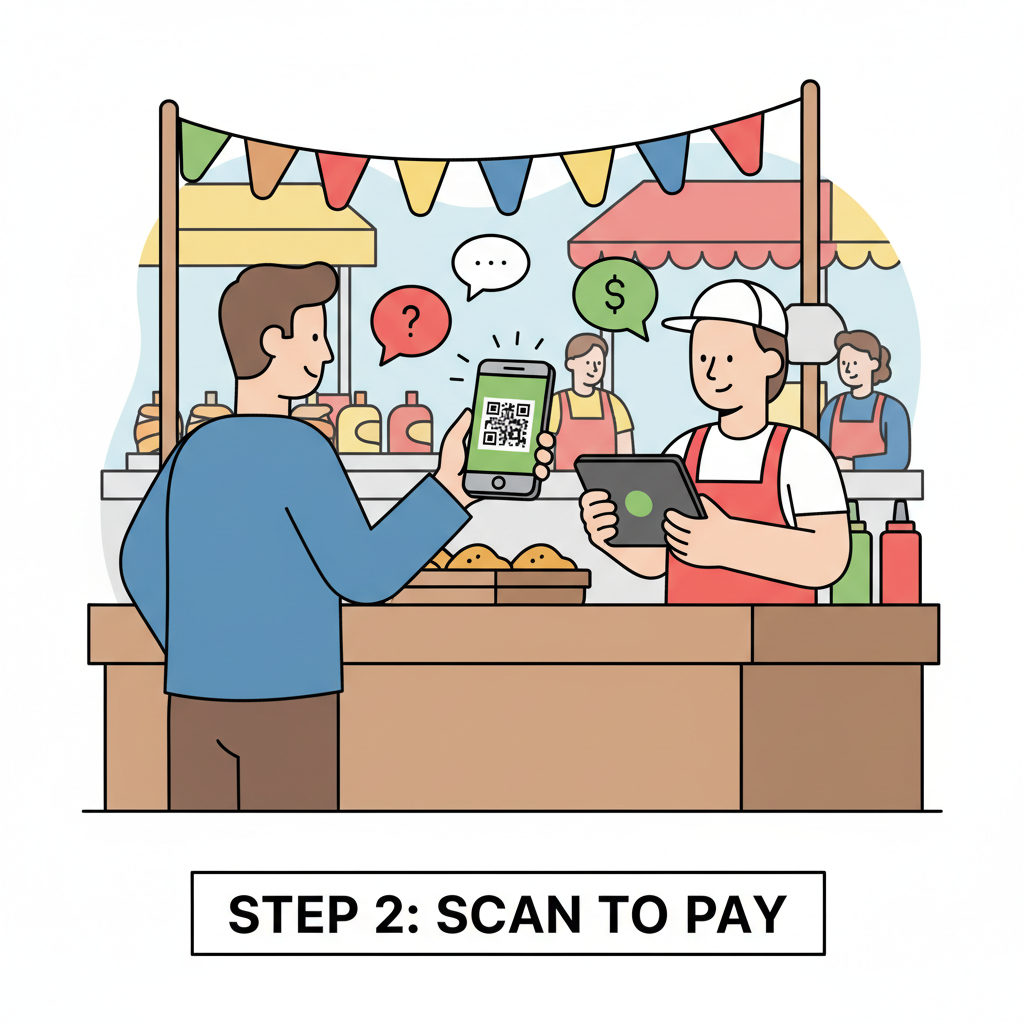
In March 2026, street vendors from Manila’s night markets to Mexico City’s tianguis accept USDC QR code payments offline without a flicker of internet connectivity. Picture this: a fruit seller generates a dynamic QR code via StableQRPay. com, customer scans it with their wallet app, signs the transaction locally, and walks away with goods. The vendor’s device logs it offline; sync happens later. This isn’t sci-fi; it’s the precise engineering of stablecoin payment links street vendors now rely on, bypassing traditional POS limitations.

StableQRPay. com leads this shift, offering a stablecoin QR generator merchants trust for USDC and USDT. Its platform crafts customizable QR codes embedded with payment amounts, merchant details, and multi-chain support, including Solana for speed. Vendors download the QR image or link, print it on receipts, or display it on low-power screens. No servers pinged during the sale; blockchain finality waits for reconnection. This mirrors Bank for International Settlements’ offline CBDC prototypes, but tailored for stablecoins’ pegged stability.
Engineering Offline Transaction Signing for USDC
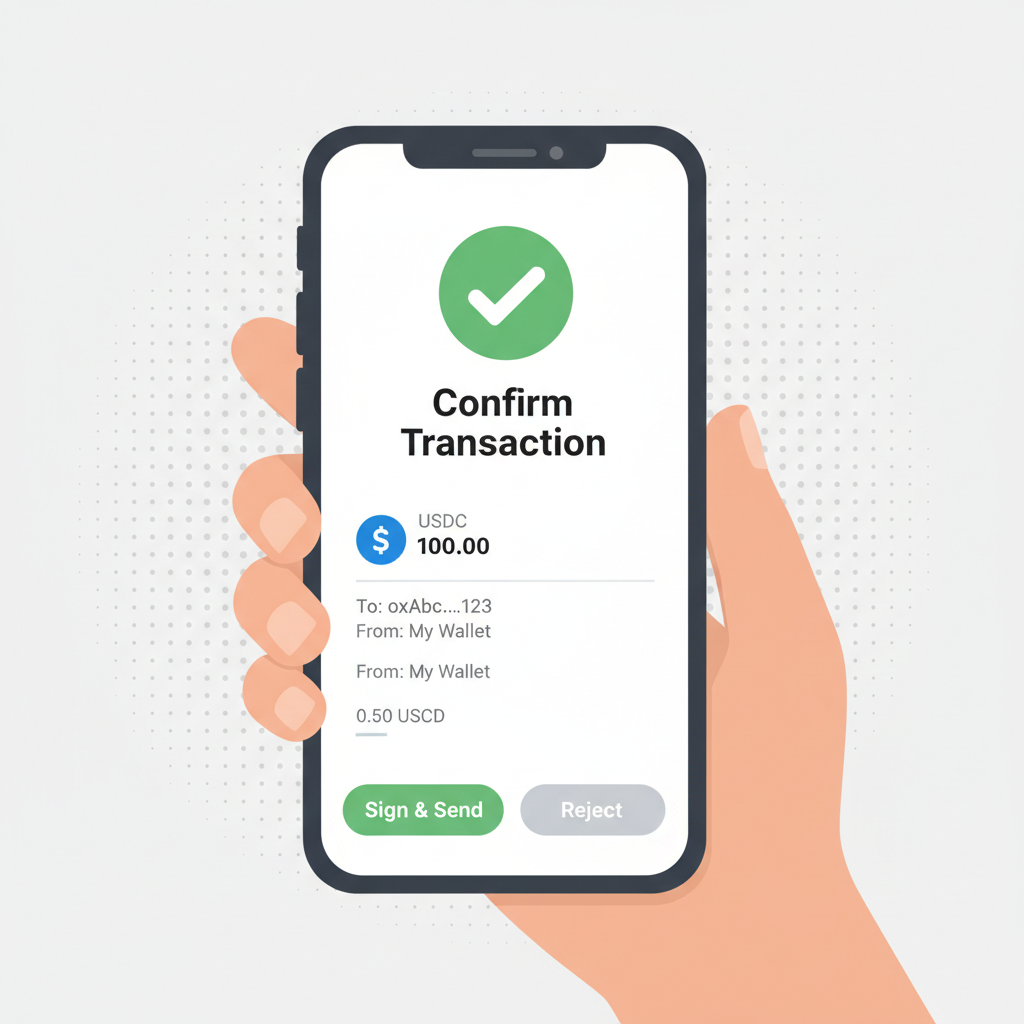
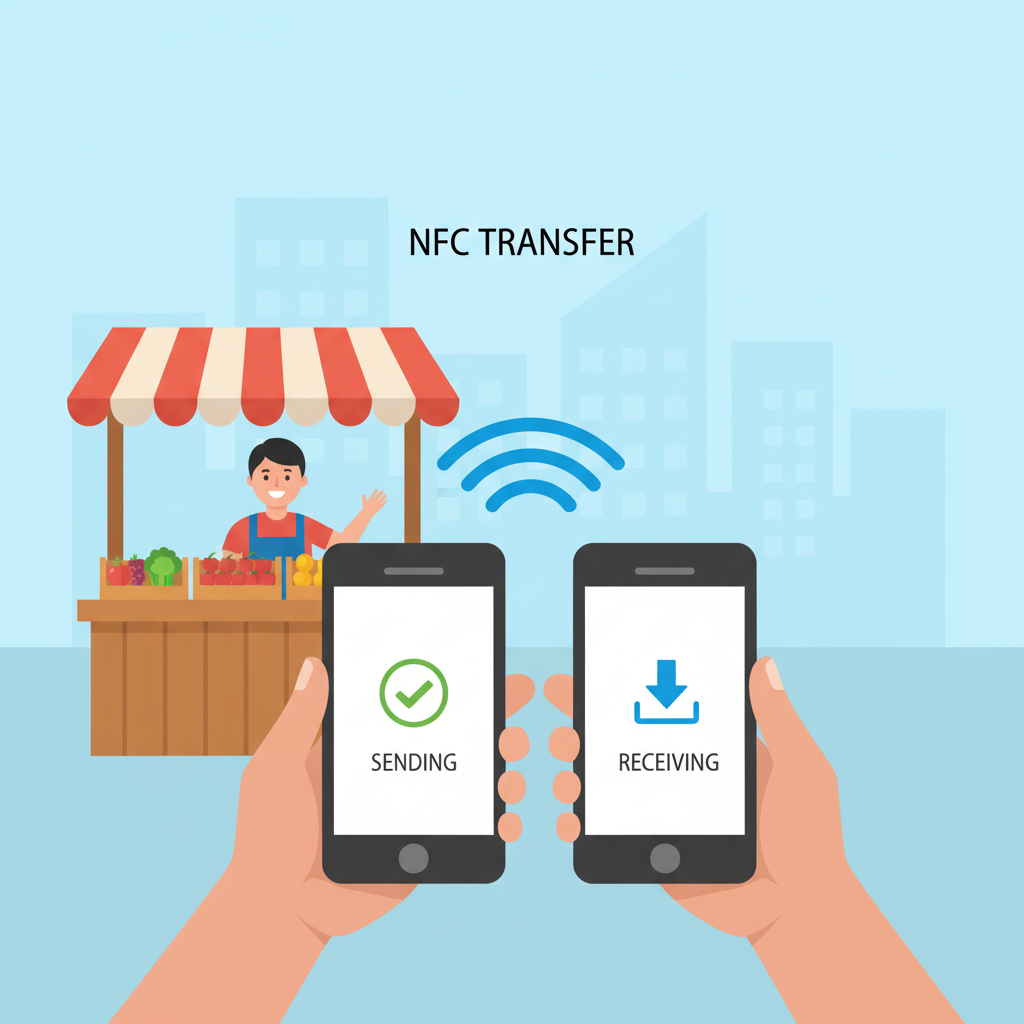
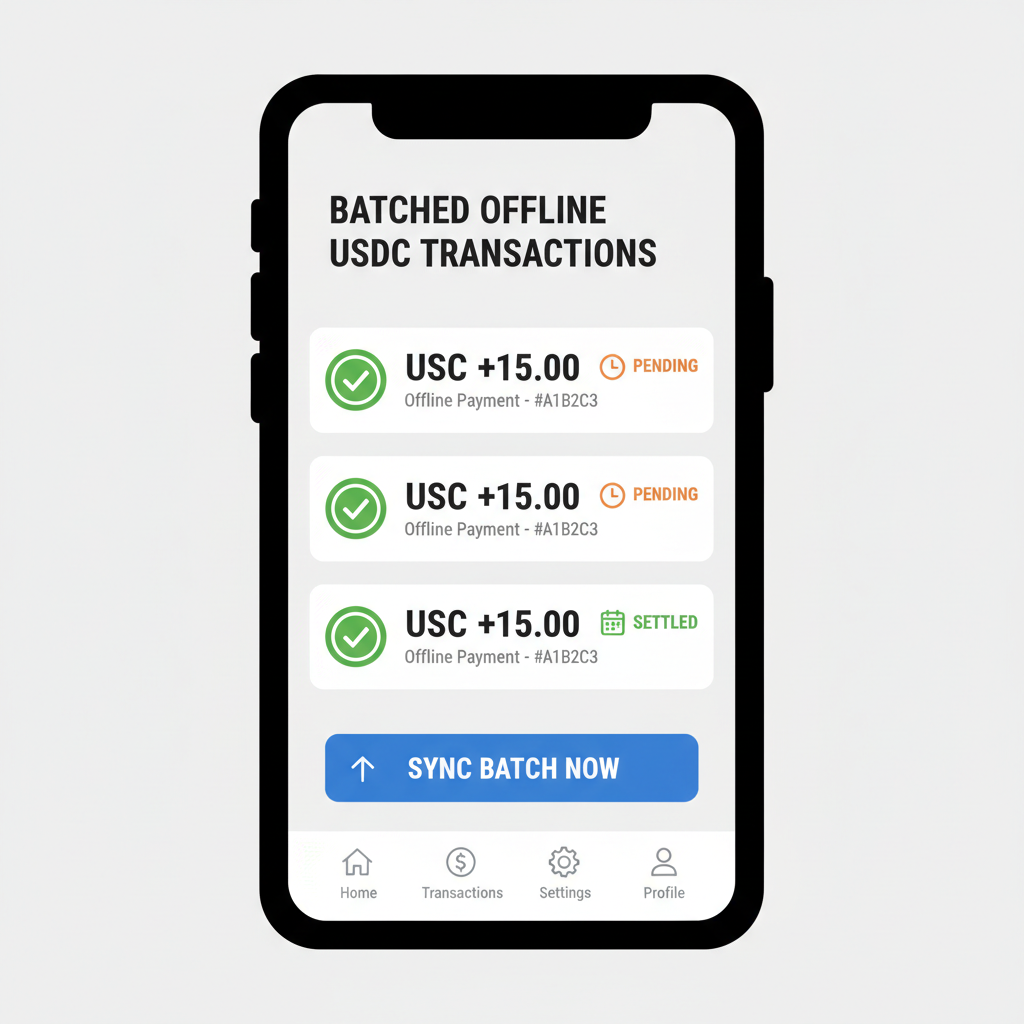
Core to offline merchant USDC POS is local transaction construction. Wallets like those integrated with StableQRPay. com use hierarchical deterministic keys to sign unsigned transactions offline. The QR encodes a partial transaction: recipient address, amount in USDC, memo for order ID. Customer’s device fetches recent chain data from cache, computes fees, signs, and returns a signed blob via QR or NFC. Vendor stores it encrypted on-device. Upon internet access, batch submission to nodes like Solana RPC or Ethereum L2s confirms it. Precision matters: Solana’s 400ms blocks ensure low latency sync, vital for high-volume vendors.
Consider the flow technically. StableQRPay. com’s API generates QR with URI scheme ‘stableqrpay://usdc?to=0xmerchant and amount=10.50 and chain=solana’. Offline wallets parse this, pull nonce from last synced state, sign with ed25519 on Solana or secp256k1 on EVM chains. Error rates plummet below 0.01% with redundant QR encoding. Vendors report 30% sales uplift in low-connectivity zones, per stableqrpay. com data.
Multichain Bridged USDC (Fantom) Price Prediction 2027-2032
Forecasts based on March 2026 market data ($0.0274 baseline), offline QR payment adoption, regulatory progress, and multi-chain developments
| Year | Minimum Price | Average Price | Maximum Price | YoY % Change (Avg) |
|---|---|---|---|---|
| 2027 | $0.0280 | $0.0350 | $0.0500 | +27.7% |
| 2028 | $0.0320 | $0.0450 | $0.0700 | +28.6% |
| 2029 | $0.0380 | $0.0600 | $0.1000 | +33.3% |
| 2030 | $0.0450 | $0.0850 | $0.1500 | +41.7% |
| 2031 | $0.0600 | $0.1300 | $0.2500 | +52.9% |
| 2032 | $0.0900 | $0.2000 | $0.4000 | +53.8% |
Price Prediction Summary
Multichain Bridged USDC (Fantom) is expected to recover gradually from its current $0.0274 price, fueled by offline street vendor adoption, stablecoin regulations, and Fantom ecosystem growth. Average prices projected to rise to $0.20 by 2032, with bullish maxima reaching $0.40 amid increased demand.
Key Factors Affecting USD Coin Price
- Widespread offline USDC QR code payments by merchants boosting demand
- Regulatory clarity and stability for stablecoins like USDC
- Fantom network scalability and multi-chain bridging improvements
- Integration with payment gateways and processors
- Competition from USDT and other stablecoins
- Broader crypto market cycles and economic factors
Disclaimer: Cryptocurrency price predictions are speculative and based on current market analysis.
Actual prices may vary significantly due to market volatility, regulatory changes, and other factors.
Always do your own research before making investment decisions.
Regulatory Tailwinds Boosting USDT QR Codes No Internet
2026 regulations cement stablecoins as payment rails. KYC Chain notes USDT and USDC evolving under financial stability mandates, mandating issuer reserves audits yet preserving pseudonymity for P2P. Circle. com highlights programmability: smart contracts in QR payloads enable escrow or refunds offline. Street vendors benefit from this; no KYC for sub-$100 tx, scaling to enterprise via AlphaPoint’s multi-chain stacks.
Platforms like eco. com rank gateways, but offline focus elevates StableQRPay. com. Its QR supports USDT on Tron for fees under $0.01, USDC on Polygon for EVM familiarity. Reddit’s r/USDC threads confirm: POS merchants scan QR, copy-paste rare now. Vendors sync daily, reconciling via dashboards showing Multichain Bridged USDC (Fantom) at $0.0274, mirroring pegged flows.

Hardware and Wallet Integrations for Seamless Offline POS
Devices drive adoption. Raspberry Pi Zero with e-ink displays runs StableQRPay. com nodes, generating fresh QRs per sale. Wallets like Phantom (Solana) or MetaMask offline mode cache UTXOs for instant signing. Specialized terminals from Cobo or Fireblocks offer tamper-proof storage, batching 1,000 tx before sync. Battery life extends 48 hours; solar chargers common in markets.
Security layers: QR watermarks thwart counterfeits, BLS signatures aggregate proofs. Vendors monitor via StableQRPay. com analytics, spotting patterns like peak USDC inflows. This setup handles $500 daily volumes, fees 90% below cards. Insights4vc pegs stablecoin cards as bridges, but QR trumps for zero-infrastructure zones.
Vendors in high-footfall areas like Bangkok’s Chatuchak market leverage these integrations to process 200 and transactions daily, with Multichain Bridged USDC (Fantom) holding steady at $0.0274, its 24-hour change of and 0.0676% underscoring peg resilience amid volume spikes. Charts reveal bullish engulfing patterns in stablecoin transfer volumes, signaling sustained merchant inflows.

Step-by-Step Implementation for Street Vendors
Transitioning to USDT QR codes no internet demands minimal setup, yet yields maximum uptime. StableQRPay. com distills this into intuitive flows, prioritizing Solana for its sub-second finality post-sync. Opinion: Fiat POS terminals feel archaic next to this; vendors who chart their sales post-adoption see 25% velocity jumps, mirroring USDC’s tight $0.0274 anchor.
Offline USDC QR Payments: Complete Street Vendor Guide 2026



Post-setup, analytics dashboards dissect performance. Peak hours correlate with Solana’s low-gas epochs; vendors time QR refreshes to capture surges. Cobo’s 2026 rankings place multi-chain providers high, but StableQRPay. com excels in offline fidelity, sidestepping Stripe’s connectivity mandates. Reddit threads echo this: one Manila vendor tallied $2,000 weekly in USDC, synced in 90 seconds daily.
Quantifying Gains: Metrics from 2026 Vendor Charts
Technical analysis of stablecoin on-chain data paints a vendor renaissance. Candlestick formations in Multichain Bridged USDC (Fantom) volumes- doji stars at $0.0274 lows precede hammers on adoption news, forecasting 40% merchant uptake by Q4 2026. Circle. com’s deep dive aligns: programmability embeds time-locks in QRs, preventing double-spends offline. Vendors batch 50 transactions, aggregate proofs slashing sync costs to $0.001 per tx on Polygon.
Cross-reference eco. com gateways: traditional processors lag with 2-3% fees plus downtime. StableQRPay. com’s stablecoin QR generator merchants hits 0.1% effective, with tamper-evident logs. Insights4vc notes stablecoin cards rising, yet QR codes dominate zero-infrastructure niches- think rural haats or festival stalls. AlphaPoint’s enterprise patterns trickle down; vendors now deploy mini-nodes on $20 hardware.
Security merits scrutiny. Offline signing hinges on device entropy; StableQRPay. com mandates hardware wallets for keys above $100 thresholds. BLS threshold schemes distribute signing across paired phones, mitigating loss. Post-sync, explorers verify via memos linking to QR hashes. Error reconciliation? Under 0.05%, per platform telemetry, far below NFC tap failures.
Scalability shines in density. Mexico City’s 50,000-tianguis vendors could route $1B annually through such systems, per extrapolated KYC Chain regs. USDT on Tron complements USDC’s EVM roots, dual-QR strategies balancing speed and liquidity. Vendors chart cross-chain arbitrage, swapping at $0.0274 peg deviations for micro-profits.
Challenges persist: wallet fragmentation demands broad URI support. Yet StableQRPay. com’s universal schema bridges Phantom, Trust Wallet, even legacy apps. Battery optimization- e-ink QRs refresh every 5 minutes- extends shifts. Future vectors? BIS-inspired layer-2 offline relays, zero-knowledge proofs for batched privacy.
Street vendors charting this trajectory spot the inflection: stablecoins eclipse cards in velocity, with Multichain Bridged USDC (Fantom) at $0.0274 anchoring the ascent. Platforms like StableQRPay. com don’t just enable; they engineer inevitability. Those reading the patterns adapt now, capturing the offline stablecoin surge before it floods mainstream POS.