Why stable QR pay 2026 matters now
The financial infrastructure supporting merchant payments is undergoing a structural shift. Traditional card rails, which have dominated the industry for decades, are showing their age in an era that demands instant liquidity. By 2026, the integration of stablecoins into QR payment systems is no longer a speculative experiment but a necessary evolution for merchants seeking to protect margins and accelerate cash flow.
The primary driver for this transition is the disparity in settlement times and associated fees. Card networks typically operate on a T+1 or T+2 settlement cycle, meaning merchants wait days to access their revenue. During this window, capital is tied up, and chargeback risks remain active. In contrast, stable QR pay 2026 offers instant settlement. Funds move from the consumer’s digital wallet to the merchant’s account in seconds, not days. This immediacy allows businesses to reinvest capital faster and reduces the administrative burden of managing float.
Fee structures present an equally compelling case. Standard credit card processing fees often range from 1.5% to 3.5%, depending on the card type and transaction volume. These costs eat directly into thin retail margins. Stablecoin QR payments leverage blockchain infrastructure to bypass traditional intermediaries, significantly lowering transaction costs. While network fees vary, they are generally a fraction of card processing fees, providing a measurable improvement to the bottom line for high-volume merchants.
The market is responding to this efficiency. Research from Juniper Research indicates that QR code payments are experiencing significant growth, particularly in developing markets where mobile infrastructure is leapfrogging traditional banking hardware. This trend is accelerating globally as merchants recognize the dual benefit of lower costs and faster access to funds.
To understand the current market dynamics, it is useful to look at the underlying assets. The stability of USDC or USDT provides the predictability merchants need, while the speed of the blockchain provides the operational efficiency. The following chart illustrates the recent performance of the broader crypto asset class, which underpins these stablecoin ecosystems.
This shift is not merely about technology; it is about financial resilience. Merchants who adopt stable QR pay 2026 are positioning themselves to operate with greater agility. As the industry moves toward instant settlement, early adopters will gain a competitive advantage in both cost structure and customer experience.
How stable QR pay 2026 works technically
Stable QR pay 2026 replaces the traditional card authorization cycle with on-chain settlement. The process begins when a customer scans a merchant’s dynamic QR code or clicks a payment link. This action triggers a smart contract or a payment provider gateway to generate a transaction request. Unlike credit card networks that route data through multiple intermediaries, this flow connects the customer’s wallet directly to the merchant’s settlement address.
The technical backend ensures finality without merchant custody risk. When the customer confirms the transaction in their wallet, the stablecoin transfer is broadcast to the blockchain. The merchant’s system monitors the mempool for confirmation. Once the block is finalized, the funds are immediately available in the merchant’s designated wallet. This eliminates the 2-3 day settlement lag typical of traditional payment processors.
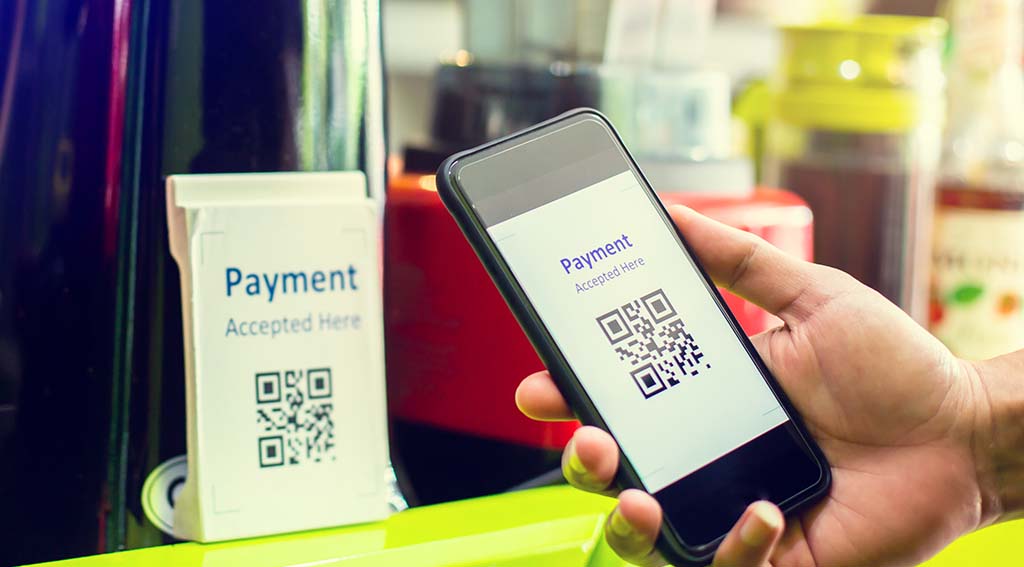
The customer scans the merchant’s QR code. The code contains a structured data payload, typically a URI scheme or a specific payment link. This payload directs the customer’s wallet to the correct recipient address and specifies the exact stablecoin amount and type required for the transaction.

The customer’s wallet displays the transaction details, including the merchant name and amount. The user reviews the information and signs the transaction with their private key. This cryptographic signature proves ownership and authorizes the transfer without exposing the user’s full wallet balance or personal data to the merchant.
The signed transaction is broadcast to the blockchain network. Miners or validators include it in the next block. For stable QR pay 2026, most transactions occur on high-throughput Layer 2 networks or established Layer 1 chains, ensuring confirmation within seconds rather than minutes.
The merchant’s point-of-sale (POS) system detects the on-chain confirmation. The stablecoin is now irrevocably in the merchant’s wallet. The merchant can hold the asset, convert it to fiat via an integrated gateway, or use it for immediate supplier payments. This direct settlement removes counterparty risk associated with third-party holding accounts.
This architecture shifts the burden of trust from financial intermediaries to cryptographic verification. Merchants no longer rely on the solvency of a payment processor to access their funds. The entire flow is transparent, auditable, and resistant to the chargeback fraud that plagues traditional card networks.
Cross-border benefits for global merchants
International transactions currently face significant friction due to foreign exchange (FX) spreads and high processing fees. Traditional cross-border payments often take days to settle, tying up working capital and introducing currency risk. Stable QR pay 2026 addresses these inefficiencies by enabling near-instant settlement in stable currencies, effectively eliminating the need for intermediate correspondent banks and reducing FX volatility.
For merchants in international tourism and B2B trade, this shift transforms the payment experience. Tourists can pay directly in their home currency while merchants receive local settlement without manual conversion. B2B suppliers can invoice and receive payment in real-time, improving cash flow predictability. The technology supports interoperable QR standards, allowing seamless transactions across different digital wallets and banking systems.
The following comparison highlights the operational differences between legacy cross-border systems and stable QR pay 2026.
| Metric | Traditional Cross-Border | Stable QR Pay 2026 |
|---|---|---|
| Settlement Time | 1-3 business days | Seconds to minutes |
| FX Cost | 3-5% spread + fees | <1% spread |
| Transparency | Hidden intermediary fees | Upfront pricing |
| Risk Exposure | High currency fluctuation | Low (stablecoin peg) |
Stable QR pay 2026 reduces the total cost of ownership for global transactions. By bypassing traditional banking rails, merchants avoid the cumulative fees charged by multiple intermediaries. The speed of settlement also reduces the need for large floating reserves, freeing up capital for growth.
Implementing stable QR pay 2026 infrastructure
Adopting stable QR pay 2026 requires verifying that your existing point-of-sale (POS) hardware can process digital wallets and QR scans. Most modern POS systems support these cashless methods, but legacy hardware may require a software update or a peripheral scanner to handle the increased transaction volume securely.
POS Compatibility and Wallet Selection
Before launching, audit your terminal specifications. Ensure your POS software is patched to recognize stablecoin payment protocols. Select a digital wallet provider that offers instant settlement to your bank account, avoiding the liquidity traps associated with holding crypto assets. Fast settlement reduces counterparty risk and simplifies accounting.

Regulatory Compliance and Staff Training
Compliance is non-negotiable. Verify that your payment processor adheres to local anti-money laundering (AML) and know-your-customer (KYC) regulations. Misconfigured wallets can expose your business to regulatory scrutiny. Train your staff on the new checkout flow to prevent errors during peak hours. Clear procedures reduce customer friction and operational downtime.
Implementation Checklist
- Audit POS Hardware: Confirm compatibility with QR scanning and digital wallet inputs.
- Select Settlement Provider: Choose a processor offering instant fiat settlement to your business bank account.
- Verify Compliance: Ensure your transaction monitoring meets local AML/KYC standards.
- Train Staff: Conduct hands-on training for checkout errors and customer support queries.
- Run Test Transactions: Process small test payments to verify settlement timing and receipt generation.
Risks and provider stability checks
Integrating stable QR pay 2026 solutions requires more than just technical setup; it demands rigorous due diligence on the payment provider’s longevity. The crypto payments landscape is volatile, and relying on a gateway that may vanish overnight exposes merchants to settlement risks and operational downtime. Unlike traditional banking rails, many crypto payment processors operate with less regulatory oversight, making provider stability a critical business continuity factor.
Recent market shifts highlight these vulnerabilities. Trust Wallet, a major player in the space, announced the temporary discontinuation of its QR Payments feature effective March 31, 2026, citing changes in payment provider infrastructure. This abrupt halt demonstrates how quickly services can be withdrawn, leaving merchants with broken checkout flows and unresolved customer transactions. When evaluating providers, look for transparent roadmaps, consistent funding, and clear communication channels rather than relying on early adoption hype.
To mitigate these risks, prioritize gateways that are regulated and have undergone independent security audits. Verify their track record of uptime and their ability to handle high-volume settlements without interruption. Use the following tools to assess current market stability and provider health.
| Feature | Stable | Unstable |
|---|---|---|
| Regulation | Licensed/Compliant | Unregulated/Gray Area |
| Audit History | Public/Recent | None or Outdated |
| Uptime Track Record | >99.9% SLA | Frequent Downtime |
| Fund Segregation | Yes, Audited | Commingled Funds |
No comments yet. Be the first to share your thoughts!