Why stable QR pay 2026 matters
The shift from card-based mobile wallets to stablecoin QR payments is driven by two immediate advantages: lower fees and instant settlement. Traditional payment networks charge merchants significant interchange fees and hold funds for days, creating friction for small businesses and cross-border transactions. Stablecoin QR payments bypass these intermediaries, allowing value to move directly between wallets in seconds.
This efficiency is reshaping commerce in regions with high transaction costs. By 2026, stablecoins are projected to account for 18% to 22% of digital payments in Latin America, where QR code infrastructure is already widespread. The technology offers a practical alternative to volatile cryptocurrencies by pegging value to fiat currencies, ensuring merchants receive predictable income without exposure to market swings.
Major platforms are accelerating this transition. Binance Pay, for instance, has expanded crypto QR payments to over ten countries, aiming for full rollout by Q3 2026 after reaching a $40 million transaction milestone. This expansion signals a move from niche experimentation to mainstream utility, particularly in markets where traditional banking access is limited or expensive.
The stability of the underlying asset is critical for this adoption. Unlike volatile tokens, stablecoins maintain a consistent value relative to the US dollar, making them suitable for everyday purchases. The following chart illustrates the price stability of USDT/USD, demonstrating why this asset class is preferred for payment rails over speculative crypto assets.
How stablecoin QR payments work
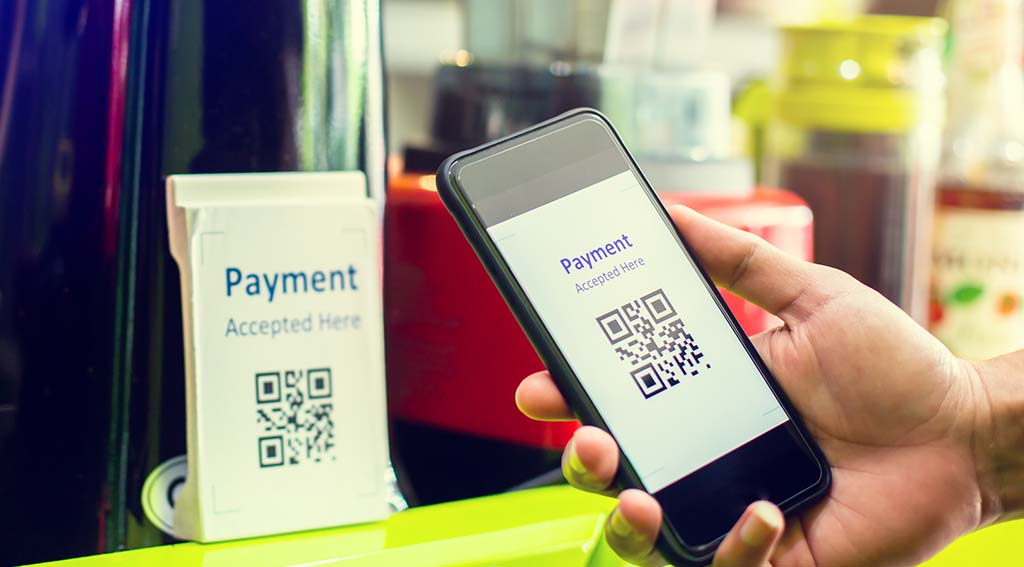
The process begins when a customer scans a merchant’s QR code using a compatible wallet app. Unlike traditional mobile wallets that route transactions through card networks or banking rails, stablecoin QR payments operate directly on the blockchain. The QR code encodes the merchant’s wallet address and the transaction amount, creating a self-contained payment request that requires no manual entry.
Once scanned, the wallet constructs a transaction and prompts the user to confirm the transfer. The user signs the transaction with their private key, broadcasting it to the network. Because stablecoins like USDT or USDC are pegged to fiat currencies, the value transferred is stable, eliminating the volatility risk associated with other cryptocurrencies. The network validates the transaction, typically within seconds, and updates the ledger to reflect the new ownership.
For the merchant, the experience is equally streamlined. The wallet app or a point-of-sale system detects the incoming transaction and verifies its confirmation on the blockchain. The merchant receives the stablecoin instantly, which can be held as a digital asset or converted to local fiat through integrated exchange services. This bypasses the delays of traditional bank settlements, which often take one to three business days to clear.
This direct peer-to-peer flow reduces friction and fees for both parties. By removing intermediaries like payment processors and clearinghouses, stablecoin QR payments offer a faster, more cost-effective alternative to conventional digital payments. The technology is gaining traction in regions with high mobile adoption, as seen in recent fintech initiatives across Southeast Asia.
Leading stablecoin QR pay platforms
The stablecoin QR payment landscape is consolidating around a few major players, each pursuing distinct expansion strategies for 2026. Binance Pay currently leads in merchant adoption volume, while Trust Wallet is undergoing significant infrastructure changes that may shift its market position.
Binance Pay has processed over $40 million in QR transactions and onboarded 21 million merchants globally. The platform plans to expand its crypto QR payment capabilities to more than 10 countries by Q3 2026, leveraging its existing infrastructure to compete directly with traditional mobile wallets [Binance Pay Expansion]. This aggressive geographic rollout positions Binance as the primary contender for cross-border stablecoin payments.
Trust Wallet recently announced the temporary discontinuation of its QR payment feature effective March 31, 2026, citing changes in its payment provider [Trust Wallet Announcement]. This strategic withdrawal creates a vacuum in the self-custody wallet segment, potentially driving users toward exchange-integrated solutions like Binance Pay or emerging competitors.
The following comparison highlights the key differences between the leading stablecoin QR pay providers, focusing on fees, supported assets, and onboarding complexity.
| Provider | Merchant Fees | Supported Stablecoins | Onboarding Complexity | 2026 Status |
|---|---|---|---|---|
| Binance Pay | Low (varies by region) | USDT, USDC, BNB | Low (exchange-linked) | Expanding to 10+ countries |
| Trust Wallet | Network fees only | Multi-chain (BSC, ETH, etc.) | Medium (self-custody setup) | Temporarily discontinued |
| MEXC Pay | Competitive | USDT, USDC, MX | Low (exchange-linked) | Growing merchant base |
| Stripe (Crypto) | Standard + crypto spread | USDC, PYUSD | High (KYC/Compliance) | Selective rollout |
Merchant economics: lower costs, faster cash
Traditional card networks operate on a legacy pricing model that extracts a significant toll from every transaction. Merchants typically pay interchange fees, assessment fees, and processor markups that collectively amount to 2% to 3% of the sale price. Stablecoin QR payments disrupt this margin structure by settling directly on-chain, bypassing the intermediary banks that drive these costs up. For high-volume retailers, this reduction in per-transaction overhead translates directly into improved net revenue without requiring a price increase for the consumer.
Beyond immediate fee reduction, the removal of chargeback risk provides a more predictable operating environment. Credit card disputes require merchants to engage in time-consuming reconciliation processes and often result in forced refunds accompanied by additional penalty fees. Stablecoin transactions are irreversible once confirmed on the ledger. This finality eliminates the administrative burden of fraud defense and protects revenue from erroneous or malicious chargebacks, allowing business owners to focus on operations rather than dispute resolution.
Settlement speed is another critical advantage. Traditional card settlements can take two to three business days to clear, tying up capital that merchants need for inventory or payroll. Stablecoin QR payments settle in seconds, providing immediate liquidity. This rapid access to funds improves cash flow management and reduces the need for short-term working capital loans. As payment infrastructure evolves, this efficiency gain becomes a competitive differentiator for businesses seeking to optimize their financial operations.
Barriers to stablecoin QR adoption
Stablecoin QR payments face three distinct hurdles before they can replace traditional mobile wallets in 2026. Regulatory uncertainty remains the primary friction point. Unlike fiat currencies, stablecoins operate in a fragmented legal landscape where compliance requirements vary wildly by jurisdiction. Merchants must navigate unclear tax treatments and anti-money laundering rules, creating hesitation to integrate new payment rails.
User education is equally critical. Most consumers understand scanning a code to pay with a bank-linked app, but the mental model for holding and spending crypto-backed stablecoins is different. Users need to trust that the digital token holds its value and that the transaction finality is immediate. Without clear visual cues or simplified onboarding, the fear of irreversible errors or complex wallet management stifles adoption.
Reliable internet connectivity forms the final barrier. While QR codes are lightweight, the underlying blockchain verification requires consistent data access. In developing markets where QR adoption is growing fastest, network instability can delay transaction confirmations. This latency undermines the core promise of instant payments, pushing users back toward offline-tolerant cash or card systems.
Frequently asked questions about stable QR pay
Is QR payment the future?
Digital payment methods have gained significant traction since 2020, and QR codes are central to this shift. Major platforms like Binance Pay are expanding QR capabilities to over ten countries by Q3 2026, signaling that merchant adoption will likely continue to grow. This trend makes QR payments a faster, safer, and more accessible option for everyday transactions compared to traditional card swipes.
Can foreigners pay with QR code?
Cross-border QR payment services are breaking down currency barriers for travelers. For example, Bangkok Bank allows both foreigners and Thai citizens to scan merchant QR codes abroad directly through their mobile banking apps. This functionality means you can pay for goods in local currencies without needing physical cash or navigating complex foreign exchange counters.
What is the current market context for stablecoins?
While QR payments are evolving, the underlying stablecoin assets fluctuate with broader crypto markets. Monitoring real-time price action helps users understand the value of the digital dollars or euros they are spending.
No comments yet. Be the first to share your thoughts!