Why stable QR pay 2026 matters now
The financial infrastructure is undergoing a structural shift from card-based credit rails to stablecoin QR infrastructure. This transition is not merely about convenience; it is about the fundamental mechanics of settlement. Traditional card networks rely on batch processing and multi-day clearing windows, creating latency that introduces counterparty risk and operational friction. Stablecoin QR payments eliminate this delay by enabling instant settlement on-chain, finalizing transactions in seconds rather than days.
The urgency of this shift is driven by the demand for real-time liquidity in global commerce. As businesses and consumers increasingly require immediate access to funds, the friction of traditional banking rails becomes a liability. Stablecoin QR pay 2026 offers a pathway to instantaneous value transfer, reducing the capital tied up in float and minimizing the exposure to settlement failures. This immediacy is critical for high-volume, low-margin transactions where every second of delay impacts the bottom line.
Market data supports this rapid adoption. Research from Juniper Research and Fortune Business Insights indicates that the global QR Code Payment Market is projected to grow from $18.49 billion in 2026 to $81.15 billion by 2034, expanding at a compound annual growth rate of 20.31% [src-serp-8]. This growth trajectory reflects a broader market recognition that instant, low-cost settlement is becoming the standard expectation for digital payments.
This convergence of technology and market demand positions stablecoin QR payments as a critical component of the future financial landscape. By bypassing the legacy card network, merchants and consumers gain access to a faster, more transparent, and cost-effective payment ecosystem. The move toward instant settlement is no longer a speculative trend but an operational necessity for modern financial systems.
Instant settlement vs card clearing
Traditional card networks operate on a T+1 or T+2 clearing cycle, creating a structural lag between transaction authorization and fund availability. When a consumer pays with a card, the merchant’s acquiring bank must wait for the card network’s clearinghouse to reconcile the transaction with the issuing bank. This process involves multiple intermediaries, risk assessments, and batch processing that delay cash flow. For high-stakes financial operations, this delay represents tied-up working capital and increased exposure to chargeback fraud during the settlement window.
In contrast, stable QR payments leverage blockchain settlement layers to achieve near-instant finality. Stablecoins pegged to fiat currencies (such as USDC or USDT) settle on-chain, often within seconds, bypassing the traditional correspondent banking network. This mechanistic difference means merchants receive confirmed, irreversible funds immediately after the QR scan, eliminating the days-long float period inherent in card processing.
The cash flow impact is significant for businesses with thin margins or high volume. Instant settlement allows for real-time liquidity management, reducing the need for reserve accounts or credit lines to cover the gap between sale and deposit. While card networks charge interchange fees ranging from 1.5% to 3.5% for this delayed service, stablecoin settlements typically incur lower network gas fees or fixed processing rates, directly improving net revenue per transaction.
| Feature | Traditional Card Clearing | Stable QR Pay Settlement |
|---|---|---|
| Settlement Time | T+1 to T+3 business days | Seconds to minutes (on-chain) |
| Fund Finality | Reversible (chargeback risk) | Irreversible (atomic settlement) |
| Intermediaries | Issuer, Acquirer, Network, Processor | Blockchain Network, Payment Processor |
| Cash Flow Impact | Delayed liquidity, tied-up capital | Immediate liquidity, real-time balance |
| Feature | Traditional Card Clearing | Stable QR Pay Settlement |
|---|---|---|
| Settlement Time | T+1 to T+3 business days | Seconds to minutes (on-chain) |
| Fund Finality | Reversible (chargeback risk) | Irreversible (atomic settlement) |
| Intermediaries | Issuer, Acquirer, Network, Processor | Blockchain Network, Payment Processor |
| Cash Flow Impact | Delayed liquidity, tied-up capital | Immediate liquidity, real-time balance |
Merchant acceptance and infrastructure
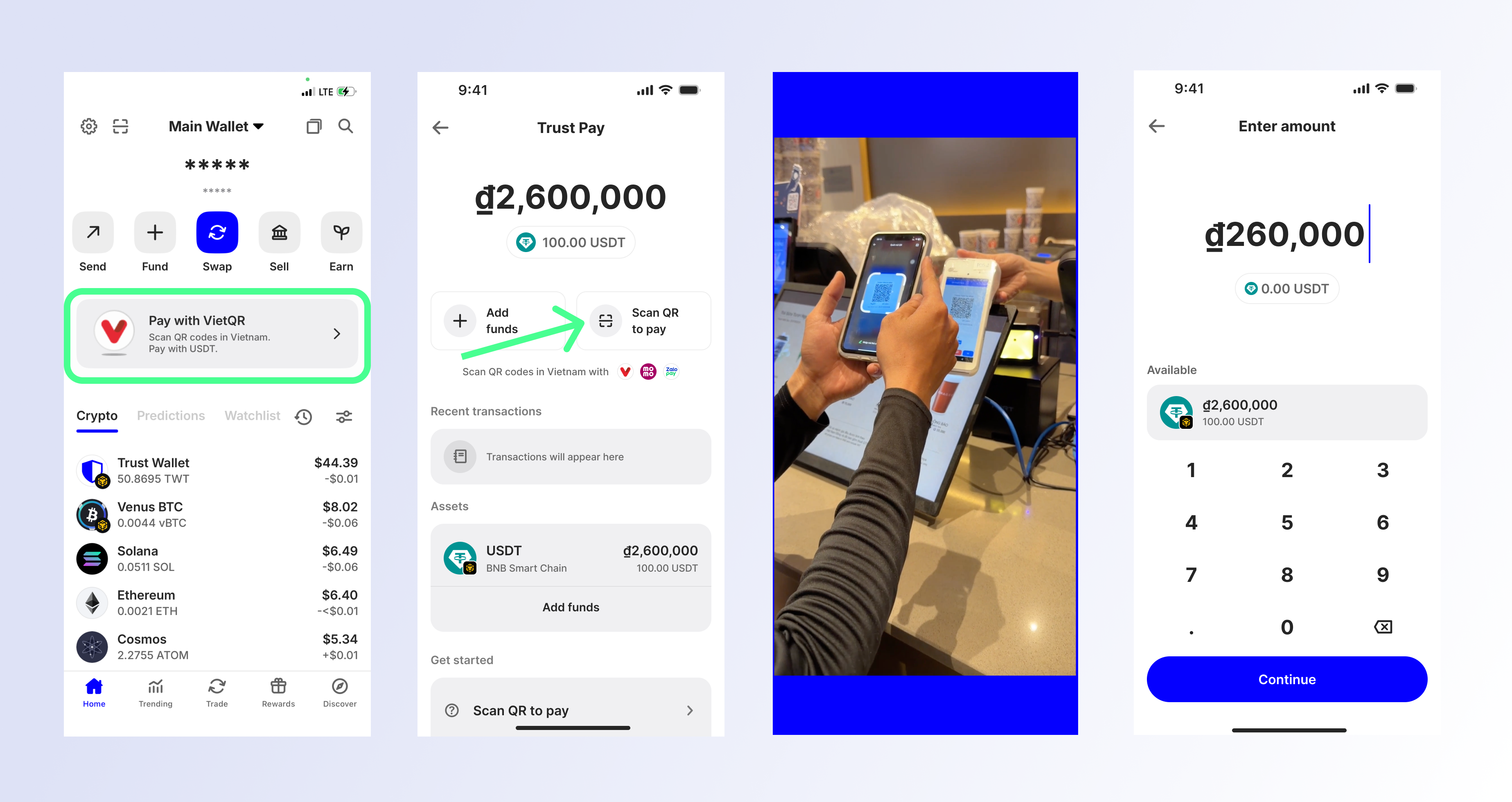
Merchant adoption of stable QR payments is currently concentrated in Southeast Asia, where regulatory frameworks have aligned with rapid digital infrastructure deployment. Vietnam and the Philippines serve as the primary testing grounds for this transition. In Vietnam, the integration of stablecoin-to-QR systems allows users to settle transactions instantly at merchants displaying VietQR codes, effectively bridging the gap between digital wallets and physical retail points of sale [[src-serp-2]]. The market is projected to reach USD 19.81 billion by 2026, driven by this seamless interoperability [[src-serp-2]].
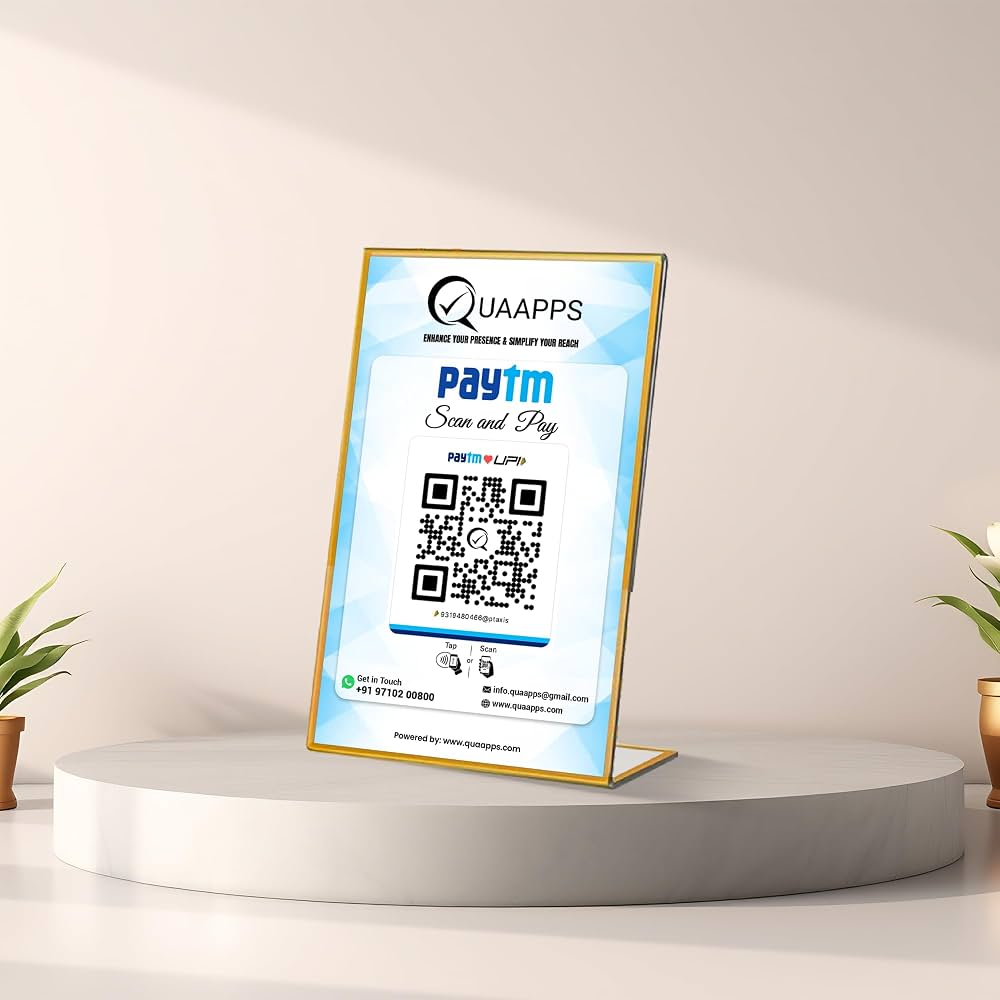
The technical requirement for this adoption is straightforward: merchants need only a QR code scanner or a compatible POS terminal that supports real-time settlement. This stands in stark contrast to traditional card networks, which often involve multi-day settlement cycles and higher processing fees. The visual simplicity of the interface—often just a printed QR code on a stand—lowers the barrier to entry for small businesses. A typical setup involves a simple acrylic display stand holding the merchant's payment code, requiring no complex hardware upgrades beyond standard internet connectivity.
However, the landscape is not without friction. Major platforms like Trust Wallet have announced temporary discontinuations of QR payment features due to changes in payment providers, highlighting the volatility of third-party integrations [[src-serp-1]]. For merchants, this underscores the importance of choosing infrastructure that offers direct, stable settlement rails rather than relying on opaque middlemen. The goal is to replicate the instant liquidity of card swipes while leveraging the programmable nature of stablecoins. As adoption scales, the focus will shift from pilot programs in Vietnam to broader regional acceptance in the Philippines and beyond, where digital literacy and smartphone penetration are highest.
Security and regulatory risks
Stablecoin QR payments operate at the intersection of traditional financial infrastructure and emerging digital assets, creating a unique risk profile. Unlike credit cards, which have decades of fraud protection and established regulatory frameworks, QR-based stablecoin settlements rely on the integrity of the underlying blockchain and the security protocols of the wallet provider. This distinction is critical for merchants and consumers who need to understand where liability lies during a failed transaction or a security breach.
The primary security advantage of this system is the immutability of the settlement layer. Once a QR payment is confirmed on-chain, it cannot be reversed, eliminating chargeback fraud that plagues traditional card networks. However, this permanence introduces new vulnerabilities. If a user’s private keys are compromised or a smart contract contains an exploit, the funds are typically irretrievable. Users must treat digital wallets with the same rigor as physical safes, utilizing hardware security modules and multi-signature requirements for high-value transactions.
Regulatory compliance remains the most volatile variable in 2026. Payment providers are subject to rapidly changing financial regulations, including anti-money laundering (AML) and know-your-customer (KYC) mandates. These requirements can lead to sudden operational changes, such as the temporary discontinuation of certain QR payment features by major providers like Trust Wallet, which paused services in March 2026 due to provider infrastructure adjustments. Such disruptions highlight the fragility of relying on third-party interfaces for critical payment flows.
Merchants integrating stablecoin QR payments must build redundant settlement paths. Relying on a single provider exposes businesses to regulatory shutdowns or technical outages. The goal is not to eliminate risk but to manage it through diversified infrastructure and clear user education on the irreversible nature of blockchain transactions.
Choosing the right payment rail
Merchants must evaluate their operational reality against the capabilities of stable QR pay versus traditional card networks. The decision hinges on two variables: transaction volume and geographic reach. Stable QR pay offers immediate settlement and lower fees, but requires specific infrastructure and customer adoption. Traditional cards provide universal acceptance but come with higher interchange fees and delayed settlement times.
High-volume, low-ticket transactions benefit most from stable QR pay. Card networks charge 1.5–3.5% per transaction, which erodes margins on small purchases. Stable QR pay typically charges 0.5–1.5%, allowing merchants to retain more revenue per sale. If your average transaction value is under $20, the fee differential becomes significant over time.

Not all point-of-sale systems support QR code payments natively. You may need to upgrade hardware or integrate third-party software. Check if your current POS can process QR codes from major stablecoin wallets or if a dedicated QR scanner is required. This upgrade cost should be weighed against the long-term savings on processing fees.
Stable QR pay is gaining traction in regions with high mobile money adoption, such as Southeast Asia and parts of Africa. In these markets, customers are already familiar with scanning codes. In North America and Europe, card acceptance remains dominant. If your customers are primarily in card-dominant regions, sticking with traditional rails may be necessary for convenience.
The choice is not always binary. Many merchants adopt a hybrid approach, accepting both stable QR pay and traditional cards. This strategy captures the efficiency of instant settlement for tech-savvy customers while maintaining universal acceptance for others. Monitor adoption rates closely; if QR pay usage grows, you can gradually shift focus to that rail.
Common questions about stable QR pay
Stable QR payments operate on a different settlement layer than traditional card networks, which changes how limits, security, and acceptance work. Understanding these mechanics is essential for managing risk and maximizing the speed of instant settlements.
No comments yet. Be the first to share your thoughts!