The 2026 QR payment landscape
QR payments have moved past their early experimental phase to become a foundational layer of global commerce. In 2026, the technology is no longer confined to domestic retail transactions in specific regions; it is scaling internationally, driven by the need for faster, cheaper cross-border settlements. The infrastructure is now mature enough to support high-volume, low-cost transfers that traditional banking rails struggle to match.
The scale of adoption underscores this shift. Over 102 million Americans scanned QR codes in 2026, while global spending on QR-based payments is projected to hit $3 trillion annually. This volume reflects a broader economic reality: for many businesses, QR codes are no longer optional marketing add-ons but essential components of daily operations. The market is expected to more than double in size by 2031, reaching $33.14 billion, signaling sustained growth rather than a temporary trend.
The critical enabler for this global expansion is the integration of stablecoins. While traditional QR systems rely on legacy currency conversion, stablecoins provide the necessary price stability for cross-border use. They allow merchants and consumers to transact in a digital asset that maintains a fixed value against fiat currencies, eliminating the volatility that typically hinders international payments. This combination of ubiquitous scanning hardware and stable digital currency is redefining how money moves across borders.
As regulatory frameworks catch up to this technology, the focus is shifting from adoption to interoperability. The next phase involves standardizing QR protocols across different national banking systems, allowing a single code to work seamlessly regardless of the user's location or currency. This interoperability is what will truly use the $3 trillion potential, turning QR payments from a regional convenience into a universal standard.
Why stablecoins solve cross-border friction
Traditional cross-border payments operate on an archaic framework of correspondent banking, where money must physically traverse multiple intermediary banks before reaching the recipient. Each intermediary takes a cut, adds a markup on the foreign exchange rate, and introduces settlement delays. For merchants accepting stable QR pay, this friction is existential. The cost of moving money often exceeds the value of the transaction itself, eroding margins and creating unpredictable pricing for consumers.
Stablecoins resolve this by decoupling the settlement layer from the legacy banking network. When a consumer scans a QR code to pay in a USD-pegged stablecoin like USDT or USDC, the transaction settles on a blockchain in seconds. The funds are transferred peer-to-peer, bypassing the SWIFT system entirely. This eliminates the need for pre-funded nostro/vostro accounts and reduces the number of touchpoints from five or six to one. The result is near-instant finality with a fraction of the cost.
The stability of the asset is the critical differentiator. Unlike volatile cryptocurrencies, stablecoins are pegged to fiat currencies, removing FX risk from the immediate transaction. This allows merchants to accept payments in a digital dollar without fearing that the value will drop before they can convert it to local currency. It effectively bridges the gap between the speed of digital payments and the reliability of fiat currency.
This infrastructure shift is particularly relevant for high-volume, low-margin transactions where traditional card networks and wire transfers are economically unviable. By integrating stablecoins into QR payment flows, businesses can offer true global accessibility. The technology supports the "stable QR pay" model by ensuring that the digital token used for scanning maintains a predictable value, making it a practical tool for everyday commerce rather than just a speculative asset.
Real-world pilot programs and adoption
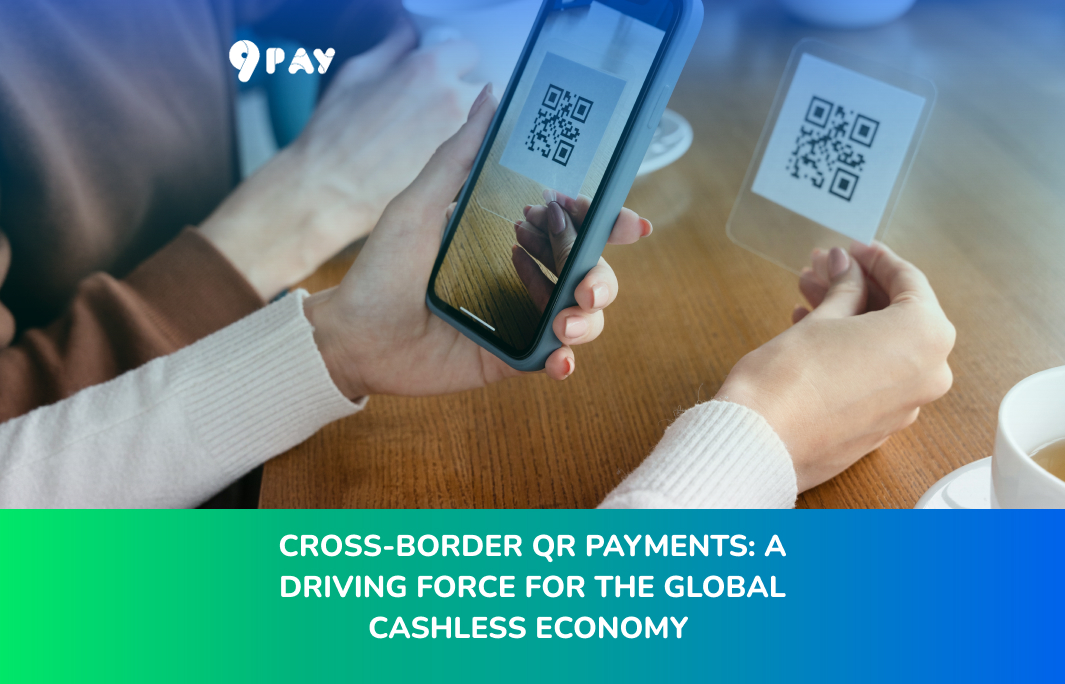
The transition from experimental pilots to functional cross-border infrastructure is accelerating, with stablecoin-integrated QR payments leading the charge. By 2026, the primary mechanism for this shift is no longer theoretical; it is embedded in the daily operations of major payment networks. The most concrete evidence of this adoption is the Alipay-VIETQRGlobal pilot, which allows Chinese tourists to scan local Vietnamese QR codes using their existing Alipay wallets. This integration bridges the gap between foreign digital wallets and local merchant acceptance, effectively removing the friction of currency exchange and card network fees for travelers.
This model is replicable across other high-volume tourism corridors. QR codes have driven the adoption of many of the world's highest volume real-time payment systems, including Brazil's Pix, by leveraging ubiquitous smartphone hardware. As these systems mature, they are increasingly supporting stablecoin settlements in the background, offering merchants faster finality than traditional card networks. The market for QR code technology itself is expanding rapidly, with global revenues projected to more than double to $33.14 billion by 2031, signaling that QR remains a dominant interface for digital commerce rather than a legacy technology.
To understand the economic driver behind this shift, it is necessary to compare the cost structures of traditional cross-border payments against stable QR alternatives. Traditional card networks often impose layered fees, including foreign transaction fees, cross-border interchange fees, and currency conversion spreads. Stable QR payments, particularly those utilizing stablecoins for settlement, can significantly reduce these costs by bypassing multiple intermediary banks.
| Feature | Traditional Cross-Border Card | Stable QR Payment |
|---|---|---|
| Settlement Time | T+2 to T+3 days | Real-time or near-instant |
| Foreign Transaction Fee | 1% to 3% | Near zero or fixed low fee |
| Currency Conversion | Dynamic bank rates | Direct stablecoin peg |
| Merchant Cost | Higher interchange fees | Lower processing fees |
Merchant integration and POS requirements
Adopting stable QR pay requires a shift from legacy card terminals to integrated QR scanners. For merchants, this transition is less about replacing hardware and more about updating the settlement layer. The goal is to accept digital dollar payments that settle instantly in your preferred currency, bypassing the traditional card network interchange fees.
1. Verify POS compatibility
Not all point-of-sale systems support stablecoin QR standards. You must confirm your current POS software can handle dynamic QR generation and real-time verification. Many modern systems now include native support for cashless and QR code payments, but older legacy terminals may require a software patch or a dedicated QR scanner peripheral. Check your provider’s documentation for 2026 compatibility lists to ensure your system can read the specific QR formats used by stablecoin wallets.
2. Select a stablecoin payment provider
Unlike credit card processors, stablecoin payments require a dedicated payment gateway or provider that can bridge the gap between crypto wallets and your bank account. Choose a provider that offers direct fiat settlement. This ensures that when a customer pays in USDC or USDT, you receive USD in your business account, shielding your revenue from cryptocurrency volatility. Look for providers with clear fee structures and regulatory compliance in your operating region.
3. Configure settlement currency and routing
Once your provider is selected, configure your dashboard to auto-convert incoming stablecoin payments into your local fiat currency. This step is critical for accounting and tax reporting. You should also set up routing rules for different transaction sizes or customer segments. For example, you might route large B2B invoices through a different wallet address for enhanced security and tracking. Ensure your accounting software can import these transaction records seamlessly.
4. Train staff on the new checkout flow
Your staff needs to understand the difference between scanning a customer’s QR code and generating a QR code for the customer to scan. Train them on the specific flow required by your chosen provider. Common scenarios include:
- Customer-scanned: The merchant displays a static or dynamic QR code on the counter or receipt, and the customer scans it with their wallet app.
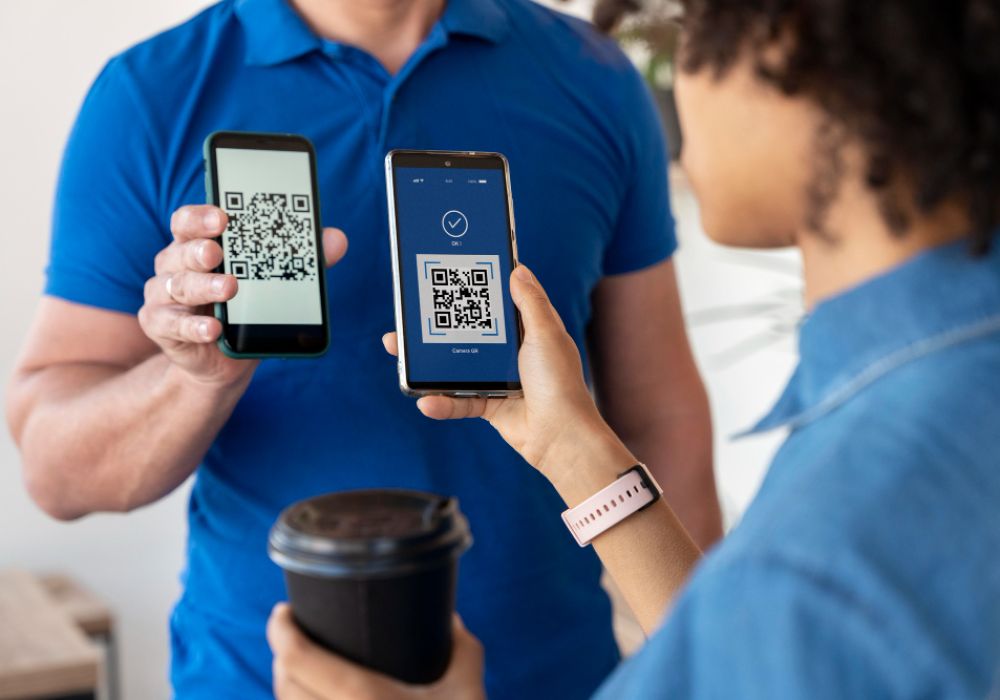
- Merchant-scanned: The merchant uses a handheld QR scanner to read a payment code presented by the customer’s mobile app.
Emphasize that verification of the "payment received" notification is mandatory before handing over goods or services. Unlike card terminals that provide an immediate signature or PIN, crypto transactions require explicit confirmation on the merchant’s screen.
Confirm your point-of-sale system supports dynamic QR generation and real-time verification. Older terminals may need a software update or a dedicated scanner.
Choose a payment gateway that offers direct fiat settlement. This ensures you receive USD in your bank account, avoiding exposure to crypto price swings.
Set up auto-conversion of stablecoins to fiat in your dashboard. Separate wallet addresses for B2B and B2C transactions can improve accounting clarity.
Teach your team the difference between customer-scanned and merchant-scanned QR codes. Emphasize that visible confirmation is required before releasing goods.
5. Test the transaction end-to-end
Before going live, conduct a series of test transactions using small amounts. Verify that the payment confirms quickly, the settlement appears in your bank account within the expected timeframe, and the receipt is generated correctly. This step helps identify any latency issues or configuration errors in your settlement routing. Once tested, you are ready to accept stable QR pay for cross-border transactions.
Regulatory considerations for 2026
As stablecoin payments cross borders, the regulatory landscape remains fragmented. International financial centers are moving from pilot programs to structured frameworks, but compliance requirements vary significantly by jurisdiction. For merchants and users, this means navigating a complex web of rules that change faster than the technology evolves.
The primary risk lies in the lack of unified global standards. While some regions embrace stablecoins as legitimate payment rails, others impose strict capital controls or ban foreign digital assets. This divergence creates friction for cross-border transactions, forcing intermediaries to implement costly KYC/AML checks at every hop. The result is a system that is technically seamless but legally brittle.
Official guidance is emerging, but it is often reactive rather than proactive. For instance, recent proposals to pilot stablecoin payments in major hubs highlight the tension between innovation and financial stability. These pilots are testing waters, not setting permanent rules. Until definitive regulations are established, businesses must treat regulatory compliance as a dynamic variable, not a static checklist.
Relying on unofficial sources or speculative reports for compliance advice is dangerous. The stakes involve significant financial penalties and frozen assets. Always refer to primary regulatory documents from central banks and financial authorities. The market is shifting, but the law lags. Clarity is not yet universal.
Frequently asked: what to check next
Stable QR pay adoption is accelerating as financial institutions seek lower-cost alternatives to card networks. The shift toward digital-first payments continues to reshape how consumers and businesses handle international transactions.
No comments yet. Be the first to share your thoughts!