How stable qr pay works
Stable QR pay functions as a direct bridge between blockchain settlements and local fiat economies. Unlike traditional card networks that route transactions through multiple acquiring banks and clearinghouses, this mechanism uses a gateway to convert stablecoins into local currency instantly. The user initiates a payment by scanning a merchant’s QR code with a self-custodial wallet. The transaction moves the underlying stablecoin (such as USDC or USDT) on-chain, while the payment gateway handles the immediate fiat settlement for the merchant.
This architecture eliminates the multi-day settlement delays inherent in cross-border card payments. In standard card processing, funds may take one to three business days to clear, during which time exchange rate fluctuations and interchange fees accrue. With stable QR pay, the conversion happens in real-time. The merchant receives the exact local currency amount agreed upon at the moment of the scan, removing foreign exchange risk from the settlement process.
The following diagram illustrates the flow of value in a typical stable QR pay transaction.

The security model relies on the transparency of the blockchain for the user side and the regulated banking rails of the gateway for the merchant side. Users maintain control of their private keys until the moment of signing, while merchants benefit from the familiarity of receiving fiat deposits directly into their existing business accounts. This dual-layer approach ensures that the speed of crypto is paired with the stability of traditional finance.
To understand the cost efficiency of this model, compare the fee structures below against traditional card processing.
Cross-border payment costs compared
Stable QR Pay works best as a clear sequence: define the constraint, compare the realistic options, test the tradeoff, and choose the path with the fewest hidden costs. That order keeps the advice usable instead of decorative. After each step, pause long enough to check whether the recommendation still fits the reader's actual situation. If it depends on perfect timing, unusual access, or a best-case budget, include a simpler fallback.
| Factor | What to check | Why it matters |
|---|---|---|
| Fit | Match the option to the primary use case. | A good deal still fails if it does not fit the job. |
| Condition | Verify age, wear, and service history. | Hidden condition issues erase upfront savings. |
| Cost | Compare purchase price with likely upkeep. | The cheapest option is not always the lowest-cost option. |
Calculate your savings with stable qr pay
Traditional cross-border settlement involves a complex chain of correspondent banks, each extracting a portion of the transaction value. Fees typically range from 1.5% to 3.5% when factoring in foreign exchange spreads and wire transfer costs. Stable qr pay infrastructure disrupts this model by enabling direct, peer-to-peer settlement on stablecoin networks, significantly reducing friction and cost.
Use the calculator below to estimate your potential annual savings. Input your typical monthly transaction volume, average transaction value, and current processing fees to see how stable qr pay compares to legacy banking rails.
The results highlight the cumulative impact of fee reduction over time. For high-volume merchants or remittance services, these savings are not marginal; they represent a fundamental shift in unit economics. By eliminating intermediary banks, stable qr pay ensures that capital moves faster and cheaper, preserving margin in high-stakes financial operations.
Security and digital wallet standards
The security architecture of stable qr pay relies on the fundamental difference between traditional card networks and blockchain-based settlement. When you use a card, the merchant’s processor holds sensitive data, creating a centralized target for fraud. With stablecoin payments, the transaction is peer-to-peer. The merchant receives funds directly on-chain, and the user retains control of their private keys. This self-custodial model removes the middleman from the security equation, significantly reducing the attack surface for data breaches and chargeback fraud.
Traditional cross-border payments often involve multiple intermediaries, each adding latency and potential points of failure. Stablecoin rails settle transactions in seconds or minutes, not days. This speed is not just a convenience; it is a security feature. Faster settlement means less time for fraudulent activity to be detected and disputed after the fact. For high-stakes commerce, instant finality provides a level of certainty that legacy banking systems cannot match.
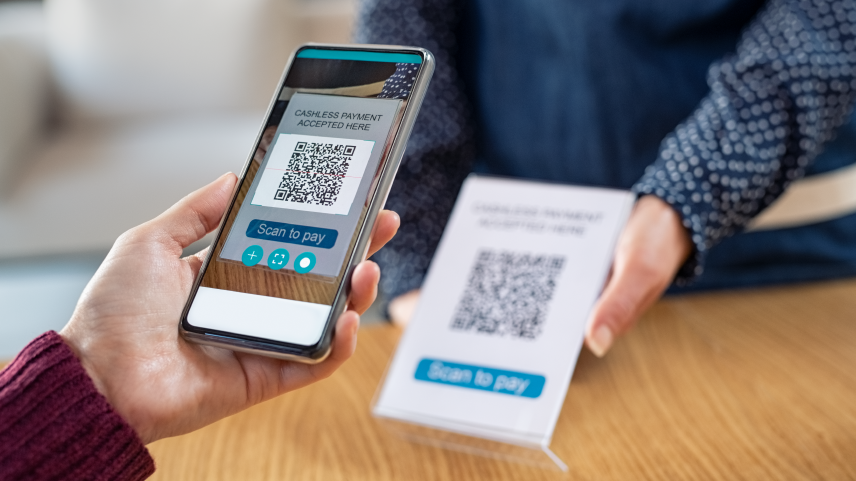
The global shift toward digital wallets is accelerating this transition. As shown in industry data, the market for B2B cross-border payments via digital wallets is expanding rapidly, driven by the need for faster, more secure settlement methods.
This infrastructure supports a more resilient financial ecosystem. By eliminating the need for shared credentials and reducing reliance on slow, opaque clearing houses, stable qr pay offers a transparent and auditable trail for every transaction. For finance professionals, this means better reconciliation, lower fraud risk, and immediate access to liquidity.
Merchant adoption and global reach
The primary barrier to stable qr pay adoption has been the friction between cryptocurrency wallets and traditional point-of-sale infrastructure. This gap is closing rapidly as major payment processors integrate stablecoin rails directly into existing local payment schemes. For merchants, this integration is not merely about accepting digital assets; it is about leveraging the settlement speed and lower transaction costs of blockchain networks while maintaining the familiar user experience of scanning a QR code.
Vietnam serves as the most critical case study for this transition. The national payment operator, VNPAY, operates VietQR, a standard that has achieved near-universal merchant penetration. Recent updates to platforms like RedotPay demonstrate how stablecoin payments can now settle instantly by scanning a VietQR code. When a consumer scans the merchant’s code, the stablecoin payment is processed on-chain and converted to the local fiat currency or settled directly, bypassing the delays inherent in traditional cross-border card networks. This interoperability allows merchants to accept payments from international users without exposing themselves to cryptocurrency volatility or complex reconciliation processes.
Beyond Vietnam, adoption is growing in regions with high remittance volumes and underbanked populations. In Southeast Asia and Latin America, merchants in high-traffic tourist areas are increasingly adopting stable qr pay solutions to offer instant settlement for foreign tourists. For finance professionals, the metric that matters is not just transaction volume, but the reduction in merchant discount rates. By cutting out the intermediary layers of card networks, merchants can retain significantly higher margins on cross-border sales, making stablecoin integration a competitive advantage rather than a novelty.
Frequently asked questions about stable qr pay
Stable QR pay combines the speed of mobile scanning with the predictability of fiat-pegged assets, addressing the volatility risks inherent in traditional crypto transactions. For finance professionals evaluating cross-border settlement infrastructure, understanding the mechanics, security protocols, and acceptance networks is essential for risk assessment and operational planning.
No comments yet. Be the first to share your thoughts!