The 2026 stablecoin market landscape
The stablecoin market has crossed a critical threshold in 2026, transitioning from a speculative asset class to a foundational layer of digital commerce. As of January 14, 2026, the collective market capitalization of stablecoins exceeded $300 billion, representing a year-over-year increase of approximately 55% [Circle Blog]. This growth is not merely a reflection of trading volume but signals a structural shift in how value moves across borders and between institutions.
This expansion is underpinned by regulatory clarity and integration into existing payment rails. Industry analysts project that stablecoins will account for 3% of all US dollar payments in 2026, with expectations to reach 10% by 2031 [Fintech Weekly]. Major payment processors have begun integrating stablecoin capabilities, treating them not as an alternative currency but as a more efficient settlement layer for the US dollar.
The stability of these assets is best observed through their trading behavior relative to their peg. The following chart illustrates the price stability and volume of USDC against the US dollar, demonstrating the reliability required for mainstream payment adoption.
Genius Act compliance requirements
The U.S. Congress passed the Genius Act in July 2025, establishing the first comprehensive regulatory framework for payment stablecoins. This legislation shifts stablecoins from a gray area into a clearly defined financial instrument, with direct implications for how merchants accept and settle digital payments. The core mandate is simple: stablecoins used for payments must be fully backed by high-quality reserves.
Under the Genius Act, issuers must maintain a 1:1 reserve ratio backed by cash and short-term U.S. Treasury securities. This requirement eliminates the fractional reserve practices that plagued earlier crypto assets, significantly reducing counterparty risk for merchants who accept these tokens. By ensuring that every token in circulation has a corresponding dollar in reserve, the law aims to prevent the kind of liquidity crises that have historically destabilized the digital asset space.
Operational transparency is equally strict. Issuers must provide monthly attestations of their reserve holdings from independent auditors. These reports must be publicly available, allowing merchants and consumers to verify the solvency of the stablecoin issuer at any time. This level of disclosure moves stablecoin operations closer to the transparency standards of traditional banking, building trust in digital payments.
For merchants, compliance means verifying that the stablecoin they accept meets these reserve and transparency standards. The Federal Reserve notes that this regulatory clarity is essential for integrating stablecoins into the broader financial system, particularly for cross-border payments where speed and cost efficiency are critical. Without this framework, the widespread adoption of stablecoins for everyday commerce would remain fraught with regulatory uncertainty.
QR Codes and Instant Settlement
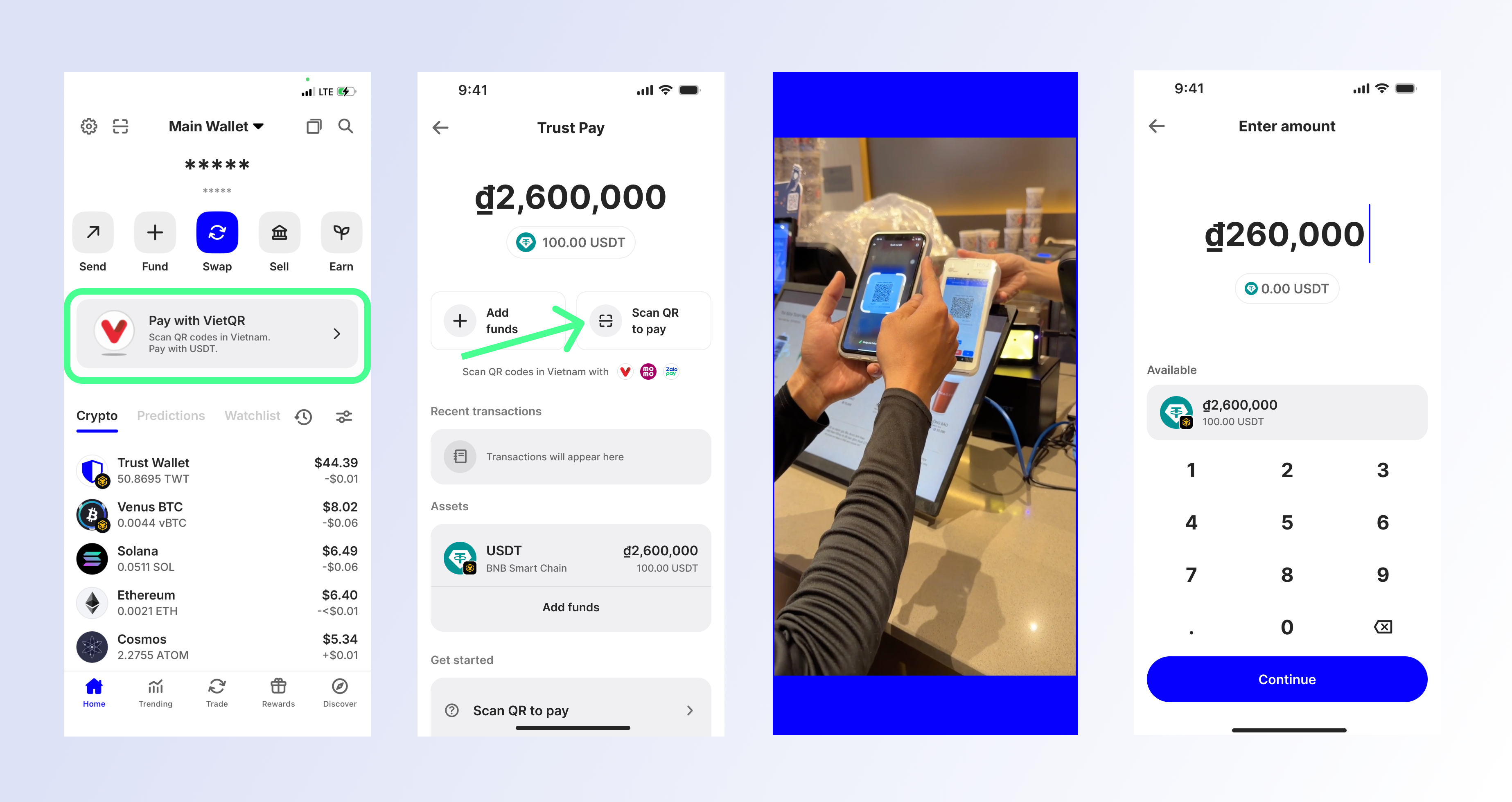
The adoption of QR codes in stablecoin payments removes the friction of manual wallet addresses. A merchant displays a dynamic QR code that encodes the recipient address, token type, and exact amount. The customer scans the code with their digital wallet, reviews the transaction details, and confirms the payment. This process mirrors the familiarity of traditional point-of-sale interactions but operates on a blockchain network.
Unlike batched ACH transfers that settle over several days, stablecoin QR payments offer near-instant finality. Once the customer signs the transaction, the network validates it and updates the ledger within seconds. This speed eliminates the gap between payment authorization and fund availability, reducing the risk of chargebacks and improving cash flow for businesses. The shift from deferred settlement to real-time finality is a structural change in how commerce operates.

Payment processors like Stripe now integrate these mechanisms directly into their platforms. According to Stripe’s 2026 support documentation, the company accepts stablecoin payments from customers in over 70 countries. The system settles these transactions in USDC on networks such as Solana, Ethereum, or Polygon, and then pays merchants in their preferred fiat or stablecoin. This integration allows businesses to leverage the speed of blockchain without managing private keys or complex wallet infrastructure.
The efficiency gains are most visible when comparing traditional fiat rails to stablecoin QR payments. The table below highlights the differences in settlement times, fees, and reconciliation complexity.
| Feature | ACH Transfer | Stablecoin QR |
|---|---|---|
| Settlement Time | 2-3 business days | Seconds to minutes |
| Transaction Fees | Low (fixed + %) | Network gas fees |
| Reconciliation | Manual or delayed | Automated and instant |
| Cross-Border FX | High markups | Minimal to none |
This comparison underscores why QR-based stablecoin payments are becoming a compliance and settlement standard. The combination of instant finality, lower cross-border costs, and automated reconciliation addresses the core inefficiencies of traditional banking rails. As regulatory frameworks solidify, this technology will likely become the default for high-volume, time-sensitive transactions.
Merchant workflow and risk controls
Integrating stablecoin payments requires treating the process like a bank reconciliation rather than a simple card swipe. Merchants must manage wallet security, handle accounting for digital assets, and navigate compliance frameworks that vary by jurisdiction. The operational burden shifts from payment processors to the merchant’s internal finance and IT teams.
Step 1: Select a compliant payment processor
Most merchants should not build their own blockchain infrastructure. Instead, integrate with established processors that handle the conversion and settlement layers. Stripe, for example, accepts stablecoin payments from customers in over 70 countries, settles transactions in USDC on networks like Solana, Ethereum, or Polygon, and pays merchants in fiat or stablecoins depending on their preference [src-serp-6]. This approach minimizes direct exposure to blockchain volatility and simplifies regulatory reporting.
Step 2: Implement wallet security protocols
If you retain stablecoins in your own wallets, security becomes your primary responsibility. Use multi-signature wallets that require multiple approvals for transactions above a certain threshold. Never store large balances in hot wallets connected directly to the internet. Consider using custodial services for large holdings to ensure institutional-grade protection against theft or loss.
Step 3: Adjust accounting and tax reporting
Stablecoins are generally treated as property by tax authorities, not currency. Each transaction may trigger a taxable event, requiring precise tracking of cost basis and fair market value at the time of exchange. Integrate your payment processor’s API with your accounting software to automate these records. Failure to maintain accurate logs can lead to significant compliance issues during audits.
Step 4: Monitor regulatory changes
The regulatory landscape for stablecoins is evolving rapidly. Stay informed about local laws regarding digital asset reporting, anti-money laundering (AML) requirements, and consumer protection standards. Engage with legal counsel specializing in fintech to ensure your operations remain compliant as new regulations are introduced.
Step 5: Test with small transactions
Before launching fully, conduct a pilot program with low-value transactions. This allows you to verify settlement times, confirm fee structures, and ensure your accounting systems capture data correctly. Test both successful and failed transactions to understand how your system handles edge cases.
Step 6: Train staff on new workflows
Your customer support and finance teams need training on how stablecoin payments differ from traditional methods. They should understand how to verify transaction confirmations, handle customer inquiries about delayed settlements, and escalate security concerns. Clear internal documentation helps reduce errors and improves customer satisfaction.
Step 7: Review and optimize operations
After a few months, analyze transaction data to identify bottlenecks or high-cost patterns. Adjust your processor settings, wallet configurations, or accounting workflows as needed. Continuous improvement ensures that stablecoin payments remain efficient and cost-effective for your business.
Choose a processor like Stripe that handles conversion and settlement, reducing direct blockchain exposure.

Use multi-signature wallets and avoid storing large balances in hot wallets connected to the internet.
Treat stablecoins as property for tax purposes; integrate APIs to automate cost basis tracking.

Stay updated on local AML and reporting laws to avoid compliance penalties.

Test low-value transactions to verify settlement times, fees, and data capture accuracy.

Educate support and finance teams on verification, delays, and security escalation procedures.

Analyze transaction data monthly to adjust workflows and improve efficiency.
Common questions about stablecoin payments
Stablecoin payments operate differently than traditional card networks, creating distinct advantages and risks for businesses and consumers. Understanding the regulatory landscape, particularly after the July 2025 passage of the Genius Act, is essential for compliance.
The absence of chargebacks reduces fraud risk but increases the burden on merchants to verify legitimacy before accepting funds. Always consult a tax professional for specific reporting requirements.
No comments yet. Be the first to share your thoughts!